Share this
By [HARRIS KHAN], Senior Correspondent for Geopolitical and Defence Affairs, Dusk News
Published: March 11, 2026
Meta Description: Russia nuclear warning Iran triggers global alarm as Lavrov says US strikes will force Tehran and Arab states to seek atomic bombs. China demands immediate ceasefire in escalating Gulf War.
URL: https://dusk.com.pk/russia-nuclear-warning-iran-war
ISLAMABAD / MOSCOW: The Russia nuclear warning Iran delivered this week has fundamentally altered the calculus of the Gulf War. Russian Foreign Minister Sergei Lavrov issued a stark prophecy: the US-Israeli military operation against Iran will trigger exactly what it claims to prevent—a catastrophic nuclear arms race across the Middle East .
“Because the US doesn’t attack those who have nuclear bombs,” Lavrov told reporters in Moscow, his words deliberate and chilling. He warned that forces will inevitably emerge in Iran “in favour of doing exactly what the Americans want to avoid—acquiring a nuclear bomb” . The logic is brutal and inescapable: when a non-nuclear state can be attacked with impunity while nuclear powers remain untouched, the nuclear option becomes the ultimate survival mechanism.
But Lavrov’s warning extended far beyond Tehran. He predicted that Arab neighbors—Saudi Arabia, the UAE, Egypt, and others—watching Iran’s decapitation will draw the same conclusion. “The nuclear proliferation problem will begin to spiral out of control,” Lavrov cautioned . The risk is now growing that the entire non-proliferation regime, painstakingly constructed over decades, could collapse like a house of cards .
This Russia nuclear warning Iran represents a strategic shift in Moscow’s posture—from rhetorical condemnation to active diplomatic warfare aimed at isolating Washington globally. And Moscow is not acting alone. In lockstep coordination, Beijing has launched its most aggressive diplomatic offensive since the war began, with Foreign Minister Wang Yi demanding an immediate ceasefire and unveiling a comprehensive five-point initiative to restore peace .
‘A War That Should Not Have Happened’: China’s Five-Point Peace Initiative
China has emerged as the most vocal diplomatic counterweight to US-Israeli military action. Foreign Minister Wang Yi, in a series of high-stakes phone calls with his counterparts from Kuwait, Bahrain, Pakistan, and Qatar, has delivered a message that could not be clearer: this war must stop now .
At a press conference on March 8, Wang Yi articulated China’s position with unusual bluntness, summarizing it into what he called “one key message”—to bring about ceasefire and end hostilities . He invoked ancient Chinese wisdom: “Weapons are ominous tools, and should not be used without discretion” .
Wang Yi’s assessment of the conflict was damning: “This is a war that should not have happened—it is a war that does no one any good” . Without UN Security Council authorization, the US and Israel attacked Iran in the midst of ongoing negotiations, a move Wang Yi condemned as a clear violation of international law .
China’s position has crystallized into five fundamental principles :
Principle Description
Respecting National Sovereignty The sovereignty, security and territorial integrity of Iran and all Gulf states must be respected and cannot be violated
Rejecting the Abuse of Force Might does not make right. The law of the jungle must not return. Civilians are innocent and should not be victimized
Noninterference in Internal Affairs Middle Eastern affairs should be determined by regional countries independently. Regime change finds no popular support
Political Settlement All sides must return to the negotiating table, resolve differences through equal dialogue, and work for common security
Major Powers’ Constructive Role Major countries should act with justice and righteousness, contributing positive energy to Middle East peace
Foreign Ministry Spokesperson Guo Jiakun reinforced this message on Wednesday, confirming that China’s Special Envoy on the Middle East Issue is currently conducting shuttle diplomacy across the region . “As a permanent member of the UN Security Council and a sincere friend of Middle Eastern countries, China will not stop working for peace,” Guo stated .
The Nuclear Domino: What Lavrov’s Warning Really Means
Lavrov’s warning about proliferation adds a dangerous new dimension to the crisis. He pointed to a fundamental paradox: the “seemingly paradoxically declared noble goal of starting a war to prevent the proliferation of nuclear weapons could stimulate completely opposite trends” .
The Russian minister emphasized that there is confirmation from both the International Atomic Energy Agency and US intelligence that Iran was not attempting to make nuclear weapons before the strikes . The war was launched to prevent a threat that intelligence agencies agreed did not exist. Now, that very war may create the threat it claimed to eliminate.
The nightmare scenario unfolding:
Iranian Calculus: Hardliners in Tehran will argue that only nuclear weapons can guarantee regime survival. The lesson of Libya—where Gaddafi abandoned his nuclear program only to be overthrown and killed—will loom large .
Arab Reaction: Saudi Arabia has repeatedly stated that if Iran develops nuclear weapons, the kingdom will seek its own. The UAE’s “123 Agreement” with the US preserves the right to enrich uranium. Egypt and Turkey have long harbored nuclear ambitions held in check by US security guarantees .
Cascading Withdrawals: If the non-proliferation regime appears worthless, a cascade of withdrawals from the Non-Proliferation Treaty could follow, with covert programs going overt across the region.
Lavrov underlined that the threat to global nuclear security is “escalating and growing” due to the Middle East conflict . The international community now faces the prospect of a Middle East where a dozen capitals possess the ultimate deterrent—a future far more dangerous than anything that existed before March 2026.
Moscow’s Mediation Gambit: Russia Positions Itself as Indispensable Power
Beyond the nuclear warning, the Kremlin is shifting from condemnation toward active diplomacy with surgical precision. Lavrov has offered Russia’s “good offices” to strengthen regional security—diplomatic language signaling that Moscow is available as a backchannel between Tehran and Washington .
Key developments from Moscow:
Recognition of New Leadership: Russia has promptly recognized the constitutional transition in Tehran, signaling its bet that the regime will survive and its desire to maintain influence .
Nuclear Safety Warning: Rosatom Director General Alexei Likhachev issued an urgent warning about the Bushehr nuclear power plant, noting that explosions have been heard just kilometers from its physical protection perimeter since nearby military facilities were bombed . “Any breach of the integrity of its reactor or fuel storage facilities could lead to radioactive contamination across vast territories,” Likhachev warned, adding that 639 Russians still remain at the plant .
No Military Commitment—Yet: The Kremlin has been clear that Iran has not requested military assistance. Spokesman Dmitry Peskov told reporters that “there were no appeals from the Iranian side” regarding arms supplies . The January 2025 Russia-Iran strategic partnership treaty lacks a mutual defence clause, meaning Moscow is not obligated to intervene. But that could change if the conflict widens.
President Vladimir Putin has called Khamenei’s killing a “cynical murder” and has spoken with Gulf Arab leaders, pledging to “make every effort to contribute to at least a slight easing of tensions” .
The Strategic Reality: Moscow-Beijing Axis Takes Shape
The coordination between Moscow and Beijing is unmistakable. On March 1, Wang Yi and Lavrov held a phone call in which they agreed to step up coordination through the UN and Shanghai Cooperation Organization to “send out clear-cut messages” calling for immediate ceasefire .
Despite this diplomatic push, analysts caution that neither power is willing to cross certain red lines—for now:
No Military Intervention: Russia appears to be prioritizing US mediation in the Ukraine conflict over direct confrontation in the Middle East .
Economic Stakes: China imports nearly 90% of Iran’s crude oil exports, giving Beijing enormous economic leverage—but also enormous exposure to instability. Every drone that falls near Gulf infrastructure threatens Chinese investments and workers .
UN Platform: Both powers continue to use the UN Security Council as their primary battleground, jointly requesting emergency sessions and building a coalition of non-Western powers to amplify ceasefire demands .
Strait of Hormuz: The Economic Jugular
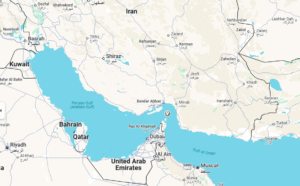
The conflict’s economic dimension is intensifying dangerously. When asked about US strikes on Iranian minelaying vessels in the Strait of Hormuz, China’s Foreign Ministry expressed being “gravely concerned” and emphasized that “the pressing priority now is that relevant parties should stop the military operations at once” .
The Strait of Hormuz and its adjacent waters are “an important international trade route for goods and energy,” Guo Jiakun noted, adding that “to keep the region secure and stable serves the common interests of the international community” .
China has reportedly been in talks with Iran to allow crude oil and Qatari LNG vessels safe passage through the Strait, though Beijing has not officially confirmed these discussions .
What to Watch in the Next 48 Hours
Lavrov’s “Good Offices”: Will Russia attempt direct shuttle diplomacy, and will either Washington or Tehran accept Moscow as an honest broker?
China’s Gulf Outreach: Wang Yi’s calls with regional powers suggest Beijing is building a coalition to amplify ceasefire demands. Watch for further diplomatic engagements .
The Nuclear Question: Will any Arab state make a public statement reconsidering its non-proliferation commitments? Even a hint from Riyadh or Abu Dhabi would send shockwaves through global markets.
Bushehr Plant Safety: With fighting intensifying near Iran’s only nuclear power plant, the risk of a catastrophic radioactive release grows by the day .
UN Security Council Maneuvering: Russia and China are expected to push for a resolution demanding ceasefire. The US will likely veto, but the vote count will matter—every abstention from a traditional US ally will be parsed for meaning.
The Bottom Line
The Russia nuclear warning Iran has transformed the diplomatic landscape of the Gulf War. The US-Israeli war against Iran was supposed to be a surgical strike against a regional adversary. Instead, it has become a global confrontation exposing the limits of American power, accelerating the formation of a Moscow-Beijing axis, and threatening to shatter the nuclear non-proliferation regime that has held for more than half a century.
Moscow is offering mediation and warning of nuclear catastrophe. Beijing is demanding ceasefire and deploying shuttle diplomacy across the region. Both are telling Washington that if this war continues, the world that emerges will be infinitely more dangerous than the one we knew just two weeks ago.
The question now is not whether the war will widen geographically. It is whether it will widen vertically—into the nuclear realm—and whether any power on earth can put that genie back in the bottle.
Share this
Join Dusk on WhatsApp
Get the latest news, videos and blogs straight to your phone.
Join Now


Be First to Comment